
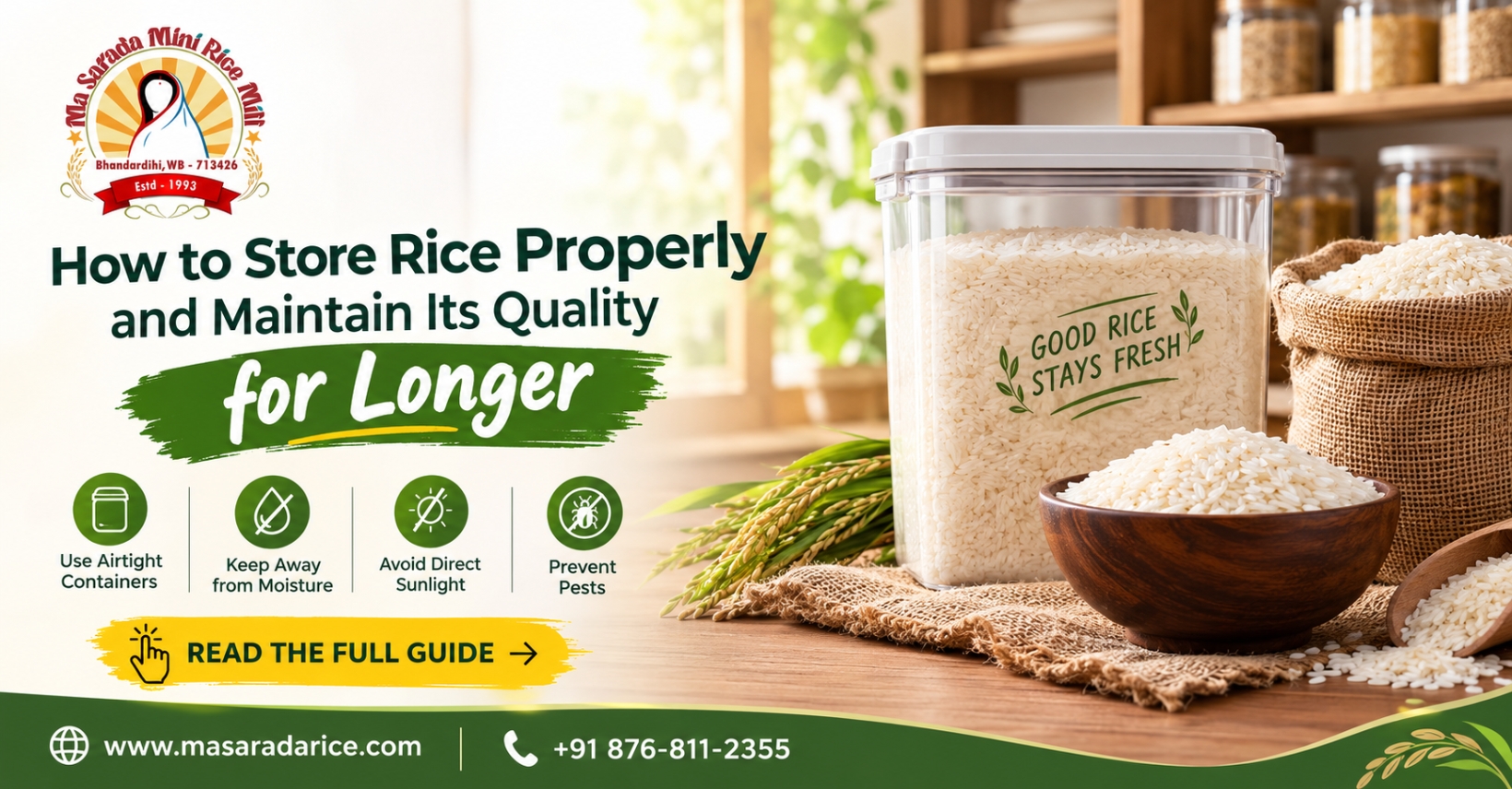
How to Store Rice Properly and Maintain Its Quality for Longer
Rice is an essential part of everyday meals across Indian households and an important product for grocery retailers, wholesalers, and food businesses. However, improper storage can expose rice to moisture, insects, unpleasant odours, and other conditions that affect its quality. Whether you purchase rice for daily cooking or buy in bulk for commercial use, following proper rice storage practices can help protect your stock and reduce avoidable waste.
At Ma Sarada Rice, we offer varieties such as Ratna, Super Miniket, Banskathi, and Premium 1010 to suit different customer preferences. Along with choosing a suitable rice variety, knowing how to store rice properly is important for maintaining its condition after purchase. For customers exploring the Best Ma Sarada Rice In Bihar and Jharkhand, understanding storage requirements can help them get more value from every purchase.
Why Is Proper Rice Storage Important?
Rice is a dry food, but its quality can be affected by excessive moisture, unsuitable temperatures, pests, and damaged packaging. Proper storage helps maintain its expected characteristics while reducing the risk of contamination.
The main benefits of storing rice correctly include:
-
Protecting rice from insects, dust, and excess moisture.
-
Maintaining its natural aroma and cooking characteristics.
-
Reducing waste caused by poor storage conditions.
-
Keeping household rice supplies organised.
-
Helping retailers and wholesalers manage inventory efficiently.
Whether you store a small quantity for your family or manage multiple bags for a business, a clean, dry storage environment is essential.
1. Choose the Right Container for Rice Storage
A suitable container protects rice from moisture, insects, and external contamination. Food-grade plastic containers, glass jars, and appropriate metal containers with secure lids are practical options for household rice storage.
Before transferring rice, make sure the container is completely clean and dry. Leftover grains and food residue can attract pests, while moisture can encourage mould growth.
Best Practices for Storing Rice in Containers
-
Use food-safe containers with tightly fitting lids.
-
Choose a container that comfortably accommodates your rice supply.
-
Clean and dry containers before refilling them.
-
Keep rice away from detergents, cleaning products, and strong-smelling substances.
-
Seal the remaining supply after taking out rice for daily cooking.
If you purchase rice in a large bag, transfer a manageable quantity into a smaller container for everyday use. Keep the remaining rice sealed in its original packaging when suitable, or use another appropriate food-safe container.
2. Keep Rice Away from Heat and Humidity
Temperature and humidity play an important role in maintaining rice quality. A damp cupboard, a shelf near a leaking pipe, or a location exposed to cooking steam is unsuitable for long-term storage.
Follow these practical rice storage tips:
-
Store rice in a cool, dry place away from direct sunlight.
-
Keep containers away from sinks, ovens, and sources of moisture.
-
Avoid placing rice bags directly on damp floors.
-
Check storage areas for leaks, condensation, and pest activity.
-
Keep the surrounding area clean and well maintained.
Humidity deserves particular attention during the monsoon season in Bihar and Jharkhand. Keep containers closed, inspect rice bags regularly, and avoid leaving large quantities exposed to humid air.
These precautions are useful for households as well as customers purchasing rice from suppliers serving Bihar and Jharkhand.
3. Protect Rice from Insects and Pests
Rice can become infested when storage areas are poorly maintained or packaging is damaged. Regular inspection is especially important for households buying in bulk and businesses managing larger inventories.
To prevent rice infestation, inspect grains for insects, webbing, unusual residue, or damaged grains before storage. Clean shelves between batches, keep bags securely closed, and check new deliveries before combining them with existing stock.
Never apply household insecticides directly to rice intended for consumption. If rice shows visible mould, dampness, or other signs of spoilage, discard it rather than attempting to make it safe through washing or cooking.
Good pest prevention and proper rice storage work together to protect your purchase and reduce avoidable losses.
4. Understand Rice Storage Life
The storage life of rice depends on its variety, processing, packaging, and environmental conditions. White rice generally stores longer than brown rice because brown rice retains its oil-rich outer layers, which are more susceptible to deterioration.
|
Rice type |
Storage consideration |
|
Uncooked white rice |
Keep sealed in a cool, dry place and follow package instructions. |
|
Brown rice |
Pay particular attention to storage duration because its natural oils can deteriorate. |
|
Cooked rice |
Refrigerate promptly and follow food-safety guidance for leftovers. |
|
Rice in opened bulk bags |
Protect from moisture and pests, and inspect regularly. |
Always check packaging for storage instructions and date information. Do not assume that uncooked rice will remain suitable indefinitely under all conditions.
Use the First-In, First-Out Method
The first-in, first-out (FIFO) method is useful for grocery retailers, wholesalers, and distributors. It involves using or selling older suitable stock before newer deliveries.
Label rice bags with their receipt dates, arrange stock so older batches are accessible, and inspect each batch before use or sale. This approach supports effective inventory management and reduces the risk of older stock being overlooked.
5. Store Rice Properly in Shops and Warehouses
Retailers and wholesale buyers need additional precautions because larger quantities may remain in storage for extended periods.
For grocery retailers: Keep rice bags in a clean, dry area away from direct sunlight, water leaks, and pest-prone corners. Secure opened bags and inspect stock regularly.
For warehouses: Use suitable pallets or shelving to keep rice bags off the floor. Maintain enough space for cleaning and inspection, and check for moisture, damaged packaging, and pest activity.
For wholesalers and distributors: Inspect incoming deliveries, record stock dates, and follow recommended storage conditions. Purchase quantities that match sales turnover and available storage capacity.
For businesses searching for a reliable rice supplier in Bihar or a rice supplier in Jharkhand, product availability, packaging, order quantities, and storage requirements are important considerations when planning purchases.
6. Common Rice Storage Mistakes to Avoid
Even good-quality rice can deteriorate when stored carelessly. Avoid these common mistakes:
-
Using damp containers: Moisture can create conditions that encourage mould growth.
-
Leaving rice bags open: Unsealed packaging increases exposure to humidity, dust, and insects.
-
Ignoring damaged packaging: Wet or torn bags should be inspected immediately.
-
Mixing old and new stock without checking: This makes stock rotation difficult and can conceal storage problems.
-
Storing rice near strong odours: Rice may absorb unwanted smells from its surroundings.
-
Buying more than you can store properly: Excess stock can remain unused for too long and become harder to manage.
Following a consistent storage routine helps protect rice quality and supports better household and commercial stock management.
Explore Ma Sarada Rice Varieties for Your Household or Business
Choosing rice involves considering your cooking preferences, intended use, packaging, and storage facilities. Ma Sarada Rice offers Ratna, Super Miniket, Banskathi, and Premium 1010 rice varieties for different household and business requirements.
Customers searching for the Best Ma Sarada Rice In Bihar and Jharkhand can explore our available varieties and enquire about suitable purchasing options. Retailers and bulk buyers can also discuss product availability, packaging, and order requirements before making a purchase.
Whether you are buying rice for everyday meals or sourcing stock for a retail business, choosing suitable varieties and storing them correctly are important parts of getting value from your purchase.
Explore Varieties and Place Your Order
Proper rice storage starts with a clean container, a cool and dry location, secure packaging, and regular inspection. Protecting rice from humidity and pests, following sensible stock rotation, and checking packaging can help maintain its quality for longer.
For households, these habits support convenient everyday cooking. For retailers and wholesalers, they help reduce avoidable losses and improve inventory management.
If you are looking for the Best Ma Sarada Rice In Bihar and Jharkhand, explore Ratna, Super Miniket, Banskathi, and Premium 1010 from Ma Sarada Rice.
Contact Ma Sarada Rice to enquire about available rice varieties and purchasing options.
FAQs
1. What is the best way to store uncooked rice?
Store uncooked rice in a clean, completely dry, airtight container in a cool place away from sunlight, moisture, and pests. Follow the storage instructions provided on the packaging.
2. How can I protect rice from insects?
Keep rice sealed, clean storage areas regularly, inspect new purchases, and avoid mixing unchecked batches. Discard rice showing signs of mould or spoilage.
3. Does humidity affect rice quality?
Yes. Excess moisture can encourage mould growth and create unsuitable storage conditions. Keep rice in a dry place and close containers after use, particularly during humid weather.
4. Is it better to store rice in plastic or glass containers?
Both food-grade plastic and glass containers can be suitable if they are clean, dry, and securely sealed. Choose a container that suits your storage quantity and is easy to maintain.
5. How should retailers store rice in bulk?
Retailers should keep rice bags off damp floors, protect them from moisture and pests, inspect packaging regularly, and use the first-in, first-out method to rotate stock.
6. Which rice varieties does Ma Sarada Rice offer?
Ma Sarada Rice offers Ratna, Super Miniket, Banskathi, and Premium 1010. Customers can contact the company to enquire about available varieties and purchasing options.
7. Where can I enquire about Ma Sarada Rice in Bihar and Jharkhand?
Visit https://masaradarice.com/ or call +91 8768112355 to enquire about Ma Sarada Rice varieties and purchasing options for household or business requirements.