
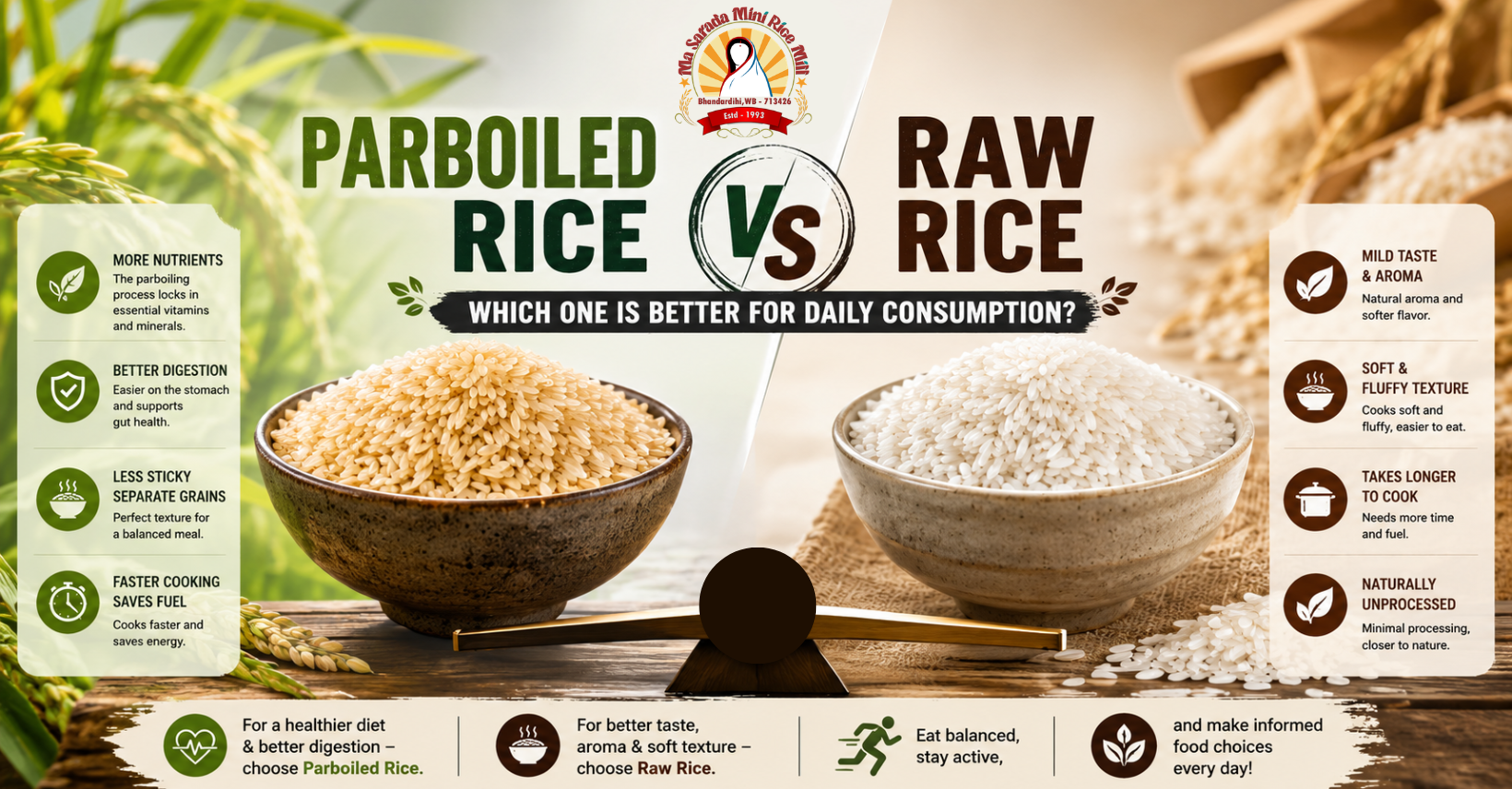
Parboiled Rice vs Raw Rice: Which One is Better for Daily Consumption?
Rice is a staple food for billions of people worldwide and plays a central role in daily meals across India. Whether it's a simple lunch with dal and vegetables or an elaborate family feast, rice often serves as the foundation of the meal. However, when choosing rice for everyday consumption, many consumers face an important question: Parboiled Rice vs Raw Rice – which one is better?
The answer depends on several factors, including nutrition, taste, texture, cooking preferences, and individual dietary needs. Understanding the differences between these two popular rice varieties can help families make informed decisions and enjoy meals that suit their lifestyle.
In this guide, we'll explore everything you need to know about parboiled rice and raw rice, compare their benefits, and help you determine which option is best for your daily consumption.
What Is Parboiled Rice?
Parboiled rice is rice that undergoes a special process before milling. The paddy is soaked, steamed, and dried while still inside its husk. This process allows nutrients from the outer layers of the grain to move into the kernel before the husk is removed.
Key Characteristics of Parboiled Rice
-
Slightly yellow or golden appearance before cooking
-
Firmer texture after cooking
-
Less sticky than raw rice
-
Longer shelf life
-
Better retention of certain nutrients
Common Uses
Parboiled rice is widely used in households, restaurants, hostels, catering services, and large-scale food preparation because it remains separate after cooking and holds its texture well.
What Is Raw Rice?
Raw rice, also known as regular milled rice, is processed directly after harvesting and drying. The husk, bran, and germ layers are removed without undergoing the parboiling process.
Key Characteristics of Raw Rice
-
Bright white appearance
-
Softer texture after cooking
-
Cooks relatively quickly
-
Popular for everyday home cooking
-
Widely available in different varieties
Common Uses
Raw rice is commonly used in Indian households for daily meals, pulao, fried rice, and various traditional dishes where a softer texture is preferred.
Parboiled Rice vs Raw Rice: Quick Comparison
|
Feature |
Parboiled Rice |
Raw Rice |
|
Processing Method |
Soaked, steamed, and dried before milling |
Directly milled after harvesting |
|
Color |
Light yellow or golden |
White |
|
Nutrient Retention |
Higher |
Moderate |
|
Cooking Time |
Slightly longer |
Faster |
|
Texture |
Firm and separate grains |
Soft and fluffy |
|
Shelf Life |
Longer |
Moderate |
|
Digestibility |
Easy to digest |
Easy to digest |
|
Popular Use |
Bulk cooking and daily meals |
Home cooking and traditional dishes |
Nutritional Comparison
When comparing Parboiled Rice vs Raw Rice, nutrition is one of the most important factors.
Nutrients in Parboiled Rice
The steaming process helps transfer some nutrients from the bran layer into the grain. As a result, parboiled rice often retains more vitamins and minerals than regular white rice after milling.
Potential benefits include:
-
Better retention of B vitamins
-
Improved mineral content
-
Lower nutrient loss during processing
-
Suitable for balanced diets
Nutrients in Raw Rice
Raw rice remains a valuable source of carbohydrates and energy. It provides essential nutrients and serves as a dependable staple food for millions of families.
Benefits include:
-
Good source of energy
-
Supports daily calorie requirements
-
Easily incorporated into various recipes
-
Available in multiple grain types
Which Is More Nutritious?
Parboiled rice generally has a slight nutritional advantage because of the nutrient migration that occurs during processing. However, both rice types can be part of a healthy and balanced diet.
Taste and Texture Differences
One of the biggest differences between parboiled and raw rice is how they feel and taste after cooking.
Parboiled Rice Texture
Parboiled rice is known for:
-
Firm grains
-
Less stickiness
-
Better grain separation
-
Consistent texture
This makes it ideal for large gatherings, restaurants, and meals where grain separation is important.
Raw Rice Texture
Raw rice is appreciated for:
-
Soft texture
-
Light and fluffy consistency
-
Pleasant mouthfeel
-
Familiar taste preferred by many households
Many families prefer raw rice because of its traditional taste and comfort factor.
Cooking Performance Comparison
Cooking behavior is another factor consumers should consider.
Parboiled Rice
Advantages:
-
Less likely to become mushy
-
Retains shape during cooking
-
Performs well in large quantities
-
Easier to handle during bulk preparation
Raw Rice
Advantages:
-
Faster cooking time
-
Softer results
-
Works well for a wide variety of dishes
-
Preferred for home-style meals
Which Rice Is Better for Daily Consumption?
The answer depends on your priorities and cooking habits.
Choose Parboiled Rice If:
-
You prefer firmer grains.
-
You cook large quantities regularly.
-
You want rice that stays separate after cooking.
-
You are looking for improved nutrient retention.
-
You need rice with a longer storage life.
Choose Raw Rice If:
-
You prefer softer and fluffier rice.
-
You want quicker cooking times.
-
Traditional taste is important to you.
-
You cook smaller quantities daily.
-
You enjoy a wider variety of rice-based recipes.
Health Considerations
Many consumers wonder whether one rice type is healthier than the other.
Benefits of Parboiled Rice
-
Better nutrient preservation
-
Stable texture after cooking
-
Lower processing losses
-
Suitable for long-term storage
Benefits of Raw Rice
-
Easy digestion
-
Pleasant texture
-
Familiar taste profile
-
Versatile cooking applications
For most healthy individuals, both varieties can be enjoyed as part of a balanced diet.
Which Rice Is More Cost-Effective?
Cost is an important consideration for families and businesses alike.
Parboiled Rice
Because of its durability and cooking characteristics, parboiled rice is often favored by:
-
Caterers
-
Restaurants
-
Hostels
-
Community kitchens
Its ability to maintain quality after cooking can reduce food waste.
Raw Rice
Raw rice remains a popular option for:
-
Home kitchens
-
Small families
-
Everyday meal preparation
Its widespread availability often makes it a practical choice for regular household use.
How to Choose the Right Rice for Your Needs
For Families
Families often prioritize taste, consistency, and affordability. Both parboiled and raw rice can meet these needs depending on personal preferences.
For Restaurants
Restaurants typically prefer rice that maintains texture and appearance throughout service. Parboiled rice is frequently chosen for this reason.
For Caterers
Bulk cooking requires consistency and grain separation. Parboiled rice often performs exceptionally well in these environments.
For Health-Conscious Consumers
Consumers seeking better nutrient retention may find parboiled rice appealing, while still enjoying the benefits of traditional rice consumption.
Why Rice Quality Matters
Regardless of whether you choose parboiled or raw rice, quality should always be a top priority.
Factors That Define Quality Rice
Grain Consistency
Uniform grains ensure even cooking and better presentation.
Freshness
Fresh rice delivers superior aroma, texture, and taste.
Processing Standards
Proper milling and handling preserve grain quality.
Clean Packaging
Reliable packaging protects rice from moisture and contamination.
Choosing a trusted rice brand helps ensure consistency and satisfaction with every meal.
Why Consumers Trust Maa Sarada Rice
When selecting rice for daily consumption, quality and reliability matter just as much as the variety itself.
Maa Sarada Rice is committed to delivering premium-quality rice that meets the needs of modern households, retailers, and food businesses. Through careful grain selection, advanced processing practices, and strict quality standards, the brand focuses on providing rice that consistently performs well in the kitchen.
Whether consumers prefer parboiled rice or raw rice, choosing quality grains ensures better cooking results, improved taste, and greater satisfaction at the dining table.
Frequently Asked Questions
1. Is parboiled rice healthier than raw rice?
Parboiled rice generally retains more nutrients due to its unique processing method, though both can be part of a healthy diet.
2. Which rice is better for daily consumption?
Both are suitable for daily consumption. The best choice depends on your preferences regarding texture, nutrition, and cooking style.
3. Does parboiled rice take longer to cook?
Yes, parboiled rice often requires slightly more cooking time than raw rice.
4. Which rice is softer after cooking?
Raw rice typically produces a softer and fluffier texture.
5. Which rice stays separate after cooking?
Parboiled rice is known for maintaining grain separation and firmness.
6. Is raw rice suitable for traditional Indian meals?
Yes, raw rice is commonly used in many traditional Indian recipes and daily meals.
7. Which rice has a longer shelf life?
Parboiled rice generally has a longer shelf life due to its processing method.
Conclusion
When comparing Parboiled Rice vs Raw Rice, there is no one-size-fits-all answer. Both varieties offer unique benefits and can serve different cooking preferences and dietary needs.
Parboiled rice stands out for its nutrient retention, firm texture, and excellent cooking performance, while raw rice remains a favorite for its soft texture, traditional taste, and versatility.
The best choice ultimately depends on your family's preferences, cooking habits, and nutritional priorities. Regardless of which variety you select, choosing high-quality rice from a trusted brand such as Maa Sarada Rice can help ensure a satisfying dining experience every day.